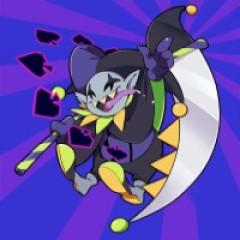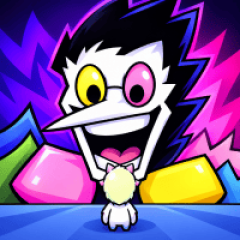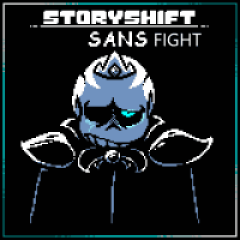
With Storyshift: Sans Fight, our goal is to create a boss battle where memorizing one safe route is not enough. You need to observe, react, and adjust your movement whenever the rules change. Whether you are familiar with Undertale-style combat or trying this kind of challenge for the first time, understanding the mechanics will help you approach King Sans with greater confidence.
When developing the concept behind Storyshift: Sans Fight, we were inspired by Bad Time Simulator and wanted to explore what makes a difficult boss encounter engaging. A challenging battle should not depend only on the number of obstacles on the screen. It should also encourage you to understand enemy behavior, recognize patterns, and use the available movement mechanics intelligently.
King Sans provides the foundation for this idea. Instead of presenting a straightforward opponent, the game places you in an arena where the enemy controls much of the danger. You cannot simply stand in one location and wait for an opportunity. You must constantly adjust your position to avoid attacks coming from different directions.
The decision to make King Sans the central opponent gives the encounter a clear identity. Your objective is to survive his increasingly complicated attack sequences until the combat reaches its end.
We wanted the battle to feel like a continuous test of awareness. That is why the attacks do not all behave in the same way. Some obstacles move horizontally, others fall from above, and certain attacks leave dangerous fire that rises through the arena. Later, unexpected objects appear randomly, and the arena can even flip.
This progression creates a natural learning curve. At the beginning, you can focus on understanding the movement of the bones and their fire. As the fight continues, you must combine that knowledge with faster reactions and greater awareness of your surroundings.
The result is a boss encounter where every new attack asks you to reconsider your position. You are not simply avoiding damage. You are learning how King Sans uses the arena to control the battle.
Another important idea behind Storyshift: Sans Fight is that movement should be more than a basic control function. Your SOUL is the center of the encounter, and how it moves determines whether you can survive.
The limited arena makes positioning especially important. You cannot escape every attack by moving endlessly in one direction. Sometimes you need to change direction, slow down, or wait for a dangerous pattern to pass before moving into a safer area.
We also wanted to make movement feel different as the battle develops. The SOUL Modes achieve this by changing the rules that govern your character. Instead of using the same controls throughout the entire encounter, you must adapt to different movement behaviors.
This design gives the battle another layer of difficulty. Knowing how to avoid an attack is useful, but knowing how your SOUL currently moves is equally important.
Like Ink Sans Fight, the objective of this game is also to guide your SOUL around the limited arena and avoid King Sans's attacks until you survive the entire combat sequence.
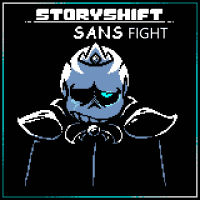
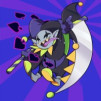
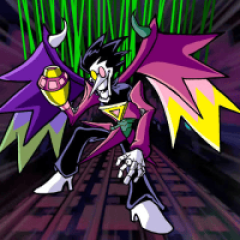
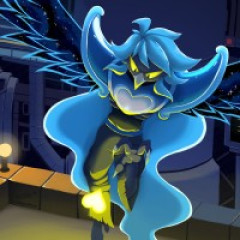
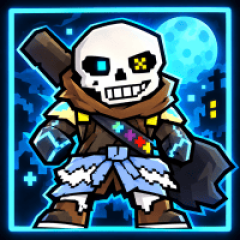
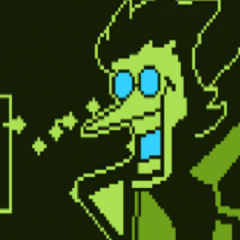
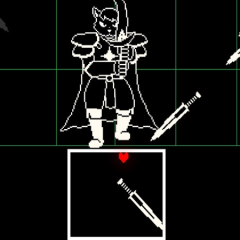
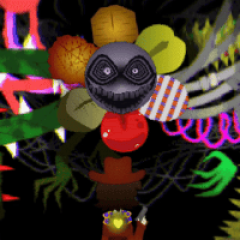
Figure 1: King Sans in Storyshift Sans Fight
You should pay attention to the direction of incoming bones, the movement of fire, and any unexpected objects that appear. The safest route can change quickly, so staying aware of the entire arena is more effective than concentrating only on the closest obstacle.
Your SOUL moves around the arena to avoid incoming attacks. In its normal red state, it can move in any direction at a constant speed. This gives you direct control over your position and allows you to move around the hazards. This is an important control option because moving at full speed is not always the best response. When an attack creates a narrow opening, slowing down can help you make more controlled adjustments. The red SOUL also has a distinctive visual detail: its heart sprouts legs when it runs away from a battle. This gives the character a recognizable appearance while maintaining the straightforward movement system. As you become familiar with the controls, try to avoid making unnecessary movements. Every direction change should help you escape a specific threat or reach a safer position.
The arena is relatively limited in size, which means that your available movement space can quickly become restricted by incoming attacks. Before moving, check where the hazards are coming from. A bone sweeping across the screen may leave a dangerous area behind it, while fire rising from the lower part of the arena can make an apparently safe position unsafe a moment later. Do not focus exclusively on the SOUL itself. Look at the surrounding space and identify possible escape routes. This is particularly important when several attacks overlap or when King Sans changes the orientation of the arena. A useful habit is to maintain enough distance from incoming obstacles whenever possible. Staying too close to a moving bone or a newly appearing object can leave you with little time to react.
How to control
Z key = Confirm.
Arrow keys = Move around.
One of the defining mechanics of this game is the ability of King Sans to change your SOUL's color. These color changes are not merely visual effects. They alter how your character behaves, meaning you must adjust your movement strategy during the encounter. The two modes described here are Red SOUL and Blue SOUL.
When your SOUL is red, it enters Normal Mode. In this state, movement behaves in a familiar way: you can travel in any direction at a constant speed. This mode gives you direct control over your position. You can move horizontally, vertically, or diagonally to avoid incoming attacks. Red SOUL is particularly useful when you need to navigate around obstacles without being affected by gravity. You can focus on finding open spaces and moving away from hazards as they approach. However, constant-speed movement also means that you should be careful when making small adjustments. Moving too quickly in a confined area can cause you to enter another attack's path. Use the slow-down control when precision matters more than distance.
When your SOUL turns blue, it enters Jump Mode. Unlike Normal Mode, this state is affected by gravity and behaves more like a side-scrolling platform game.
The most interesting part of this mechanic is that King Sans appears to have much greater control over gravity than a conventional platforming system would allow. Instead of gravity always pulling your SOUL downward, he can force it in all four directions.
This means that you must pay attention to the direction of gravity before deciding how to move. A movement that would normally send your SOUL upward may behave differently depending on the current gravitational force.
To make your SOUL jump, press a direction opposite to the force of gravity. For example, if gravity pulls the SOUL downward, pressing upward makes it jump. The same principle applies when gravity is directed toward another side of the arena.
The height of the jump depends on how long you hold the upward direction, up to a maximum height. The maximum can vary depending on the attack, so you should not assume that every jump will reach the same height.
Blue SOUL requires you to think differently about movement. In Normal Mode, you can move freely in any direction. In Jump Mode, your movement is influenced by gravity, and jumping becomes the main way to escape certain hazards. Start by identifying which direction gravity is pulling. Once you understand that direction, you can determine which input will make the SOUL jump away from it. You should also pay attention to how long you hold the jump direction. A short input may produce a lower jump, while holding it longer can increase the height until the maximum is reached. Because the maximum jump height can depend on the attack, observation is essential. Avoid assuming that a jump that worked in one situation will provide the same result in another.
King Sans uses several types of attacks throughout the encounter. The sequence gradually introduces new hazards, requiring you to learn how each one moves and how it affects the available space.
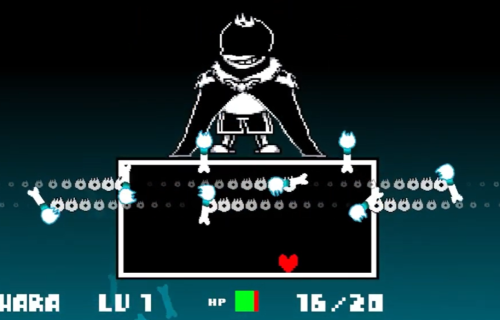
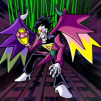
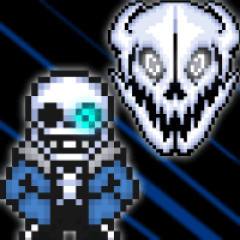
Figure 2: Attacks from King Sans
At the beginning of the battle, you must move around bones covered in fire. These obstacles travel from left to right and then in the opposite direction. Their horizontal movement means that staying in one place for too long can become dangerous. Watch the direction of the bones and move away before they reach your SOUL. Avoid making sudden movements without checking the opposite side of the arena. Escaping one sweeping bone is not useful if you move directly into another hazard.
After the opening attack, bones with fire begin dropping from the top of the arena. This changes the direction from which you need to anticipate danger. Your main response is to move left or right to avoid the falling obstacles. Look at the area where the bones are descending and choose a side with enough room to escape. Do not remain directly underneath an incoming bone while waiting for it to reach you. Recognizing the falling attack early gives you more time to reposition your SOUL.
Later, the bones return to horizontal movement, traveling from left to right and back again. However, this attack introduces an additional danger: the bones leave behind fire that rises through the arena. You must avoid both the moving bones and the fire that follows them. Escaping the main obstacle is only part of the challenge because the rising flames can occupy spaces that previously looked safe. Keep watching the arena after a bone passes. Do not immediately move into the space it has just crossed, as the rising fire may make that route dangerous.
Another attack introduces numerous boxes marked with exclamation points. These objects appear randomly around the arena, making it harder to predict where the next threat will emerge.
Your best response is to stay aware of your surroundings and avoid moving blindly toward an open space. A location that appears safe can become occupied by one of these boxes.
Try to maintain enough room to change direction when a new object appears. Controlled movement is particularly valuable during this attack because random hazards can punish unnecessary positioning mistakes.
Fire-covered bones appear again later in the battle and move around the arena. Since you have already encountered similar hazards, this stage tests whether you can apply what you learned earlier. However, familiarity should not make you careless. The bones still require careful positioning, and the surrounding fire can reduce your available escape routes. Watch their movement and avoid assuming that the next attack will follow exactly the same path as the previous one.
Toward the later part of the encounter, the arena flips and numerous fire hazards begin flying through the area. This is one of the most demanding moments because the familiar orientation of the arena changes. You must quickly reassess your position and identify where the flying fire is traveling. Do not rely entirely on your previous movement habits. Take the changed arena orientation into account and respond to the direction of the incoming hazards. Your goal remains the same: keep the SOUL away from every attack and survive until the combat ends.
Understanding the attacks is only the first step. To improve your performance in Storyshift: Sans Fight, you need to turn that knowledge into consistent decisions during the battle.
Before choosing where to move, identify the direction in which the current obstacle is traveling. Horizontal bones, falling bones, and rising fire all behave differently. Recognizing these differences helps you choose a movement that avoids the actual threat rather than simply moving away from its current position.
Random movement can make the battle harder. You may avoid one obstacle only to move into another, especially when fire or exclamation mark boxes occupy the arena. Look for open space before changing direction. Try to move toward a route that gives you room to react if another attack appears.
Holding CANCEL or Shift slows down the red SOUL. This option is useful when you need to make small adjustments or avoid overshooting a narrow opening. You do not need to move at maximum speed all the time. Controlled movement can be more valuable when the arena becomes crowded.
Identify Gravity Before Jumping
When your SOUL turns blue, do not immediately assume that pressing upward will always make it jump in the same way. First, identify the direction of gravity. Remember that pressing in the opposite direction causes the SOUL to jump. Since King Sans can force gravity in four directions, this understanding is essential for responding correctly.
The height of a blue SOUL jump depends on how long you hold the direction opposite to gravity, up to the maximum allowed for that attack. Use this mechanic deliberately. A shorter jump may be enough to avoid one hazard, while another situation may require a longer input. Pay attention to the attack rather than using the same jump duration every time.
A common mistake is relaxing as soon as the main obstacle moves away. In this battle, one attack can leave another threat behind. Sweeping bones, for example, can leave fire that rises through the arena. Continue observing the surrounding space after avoiding an obstacle. Make sure your next movement does not lead into a secondary hazard.
The arena flip changes the visual orientation of the encounter. Take a moment to understand the new situation and identify where the flying fire is coming from. Do not continue using the same movement assumptions without checking the changed layout. Adapting quickly is more important than reacting automatically.