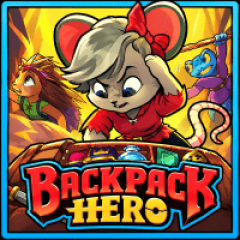
Ready for a new roguelike challenge in Backpack Hero. Arrange your items wisely, discover powerful combinations, defeat enemies, and rebuild Haversack Hill.
Like RPG Pixel Hero: Crimson Quest, this game also offers a roguelike adventure, but its inventory system changes the way you approach almost every decision. You are not simply asking whether an item is powerful. You also need to consider whether it fits your current backpack and whether its position can improve or weaken other items. Every item takes up space, and different objects have different shapes and sizes. This means your backpack becomes a puzzle that develops alongside your character. For example, an accessory placed beside a weapon might provide a useful bonus, while moving it somewhere else could remove that benefit. Gems can strengthen neighboring items, certain magical equipment interacts with Mana, and defensive equipment can work together to provide stronger protection.
Inventory management is at the heart of the Backpack Hero game. Every empty space matters, especially when your collection starts growing. Instead of filling the bag with every useful-looking item, you need to decide what deserves valuable space. An item that seems weak by itself may become extremely powerful when positioned correctly. On the other hand, a strong item may not be worth carrying if it takes up too much room or interferes with your existing setup. This creates a constant optimization challenge. After finding new equipment, you may want to rearrange your entire backpack to make room for it or activate a better combination. The result is a system where organization is just as important as collection.
The location of an item can have a direct effect on your strategy. Some objects provide bonuses to nearby equipment, while others depend on being positioned next to specific item types. This makes rearranging your backpack an important part of every run. You can experiment with different layouts and discover combinations that were not immediately obvious. A good backpack is not necessarily the one containing the most items. It is the one where the items work together efficiently.
Like Intrusion 2, this game also allows you to participate in exciting combats. Understanding enemy behavior also matters. With more than 100 enemies to encounter, you have opportunities to learn different attack patterns and prepare your backpack accordingly. Some encounters may reward defensive preparation, while others may encourage you to eliminate a threat quickly before it becomes dangerous. Knowing what an enemy is capable of can help you make better decisions about which weapons, shields, armor, consumables, and other items to carry. The more you understand the enemies you encounter, the easier it becomes to build a backpack that suits the challenges ahead.
How to control
One of the biggest attractions of the Backpack Hero game is the variety of items available. You can collect more than 800 distinct items, each offering different possibilities for your build. Instead of treating the collection as a simple list of upgrades, experiment with how different item categories interact.
This distinction encourages you to consider the type of threat you are facing rather than simply stacking as much defense as possible.
Because these items have different purposes, deciding what to keep can be just as important as finding them.
This adventure game offers five unique play styles through different heroes. Each character brings their own identity to the adventure, and character-exclusive items can further shape how you organize your backpack. Choosing a hero is therefore more than a cosmetic decision. It can influence which combinations you want to pursue and which items become particularly interesting during a run. You can experiment with different heroes to discover which style suits the way you prefer to manage equipment, combat enemies, and solve inventory problems. A build that works well for one character may not have the same value for another, giving you a reason to approach future runs differently.
One of the defining features of the Backpack Hero game is its replayability. Endless dungeons use randomly generated levels, which means each run can introduce new layouts, items, events, and challenges. This unpredictability prevents you from following the exact same routine every time. You may start with one strategy in mind and then completely change direction after discovering an unexpected item. The best approach is often to remain flexible. Instead of deciding your entire build before the run begins, let your discoveries influence your decisions. A randomly generated dungeon can turn an ordinary run into something completely different from what you expected.
The adventure does not end when you leave the dungeon. Backpack Hero also gives you a reason to care about what happens outside combat through Haversack Hill. When you are not putting your life in danger, you can use the resources you have gathered to rebuild your hometown. Your goal is to transform Haversack Hill into a charming and efficient hamlet that can attract new residents.
Village development adds a different type of progression to the game. Instead of organizing items or fighting enemies, you can focus on improving the settlement and making better use of the resources you have collected. You can buy and sell items, conduct research, and unlock heroes, challenges, and quests. These activities create a connection between your dungeon adventures and the development of the village. The stronger and more developed Haversack Hill becomes, the more opportunities you have to expand your overall adventure.
The village system also connects to a larger goal: helping restore the world of Orderia and rescuing the animals that live there. This gives your dungeon runs a purpose beyond collecting equipment. The resources you gather can contribute to rebuilding the world around you, while new unlocks give you additional reasons to keep exploring. It creates a satisfying loop between adventure and progression: explore dangerous locations, gather resources, improve your settlement, unlock new possibilities, and return to the dungeon with a fresh strategy.
There is no single perfect backpack because the best arrangement depends on the items you find and the hero you choose. However, a few principles can help you make better decisions.